From the history of the French baguette to the journey of a Vietnamese immigrant, a classroom expedition invites students to discover how language, culture, and human stories connect us.
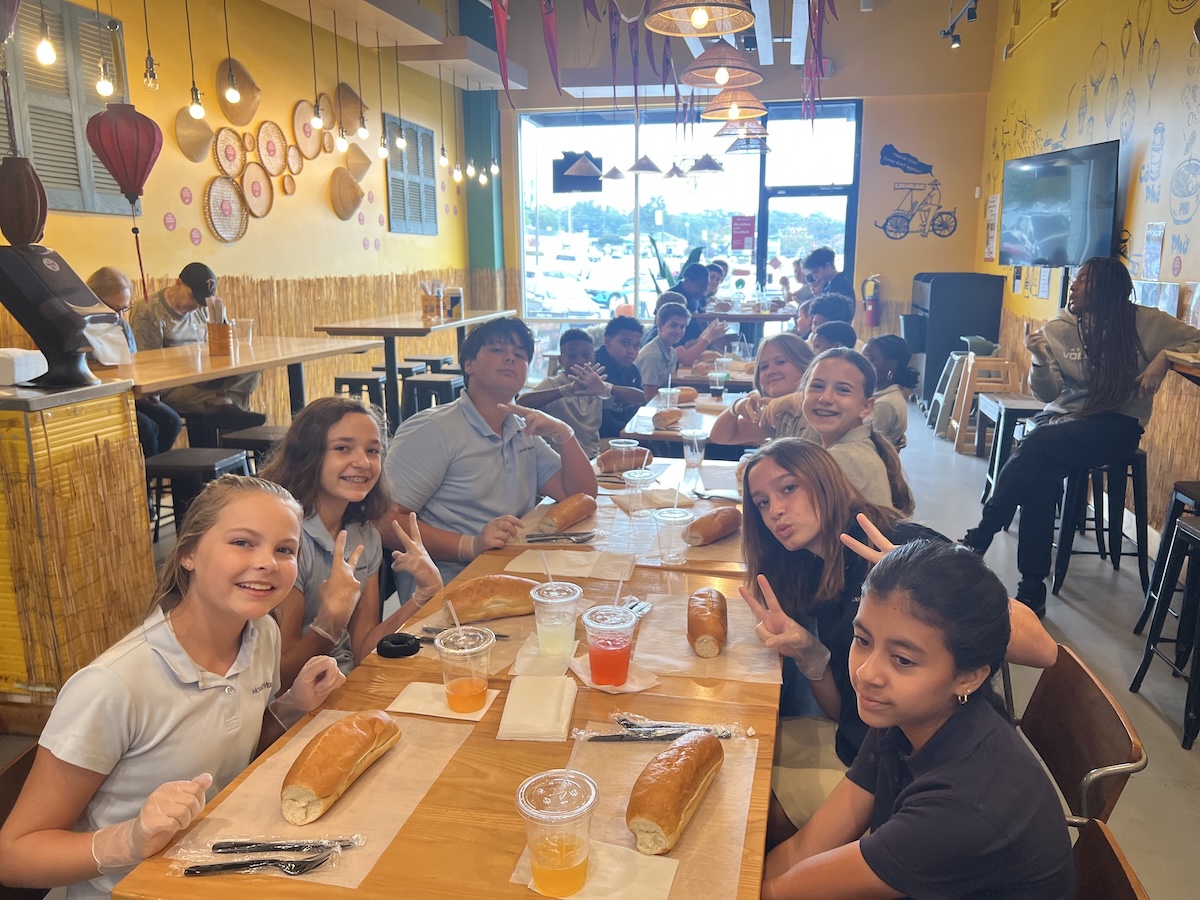
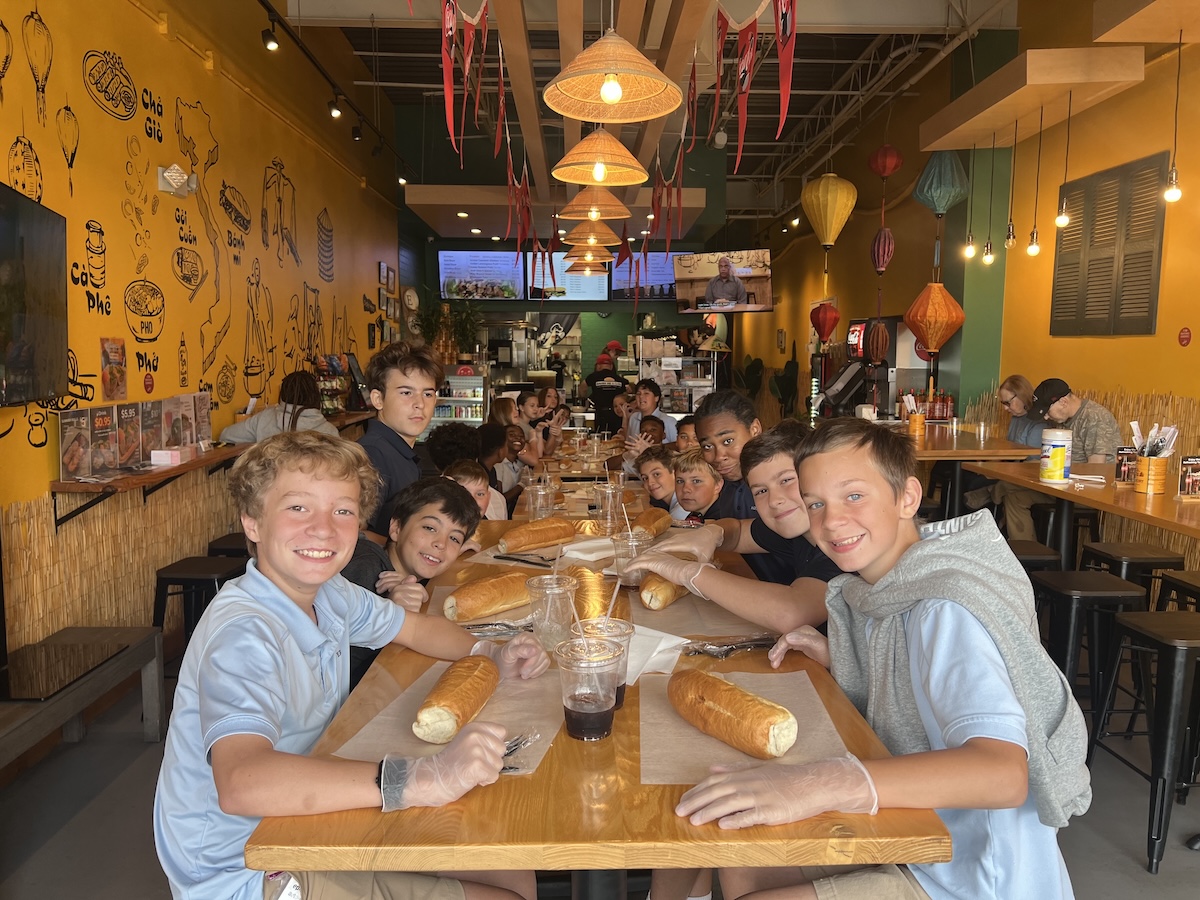
What can a sandwich teach you about language, history, immigration, and the ways cultures influence one another? For Mount Vernon’s G7 French students, the answer came one bite at a time. As part of a project-based learning experience exploring how language travels around the world, students stepped beyond the classroom and into Saté Banh Mi & Grill to investigate the connections between French and Vietnamese culture. Their expedition offered a new perspective on a familiar food and an opportunity to see how history lives in the world around them.The experience also offered a timely connection to National Bánh Mì Day, celebrated October 10, and a reminder that even an everyday meal can open the door to extraordinary questions.
In DeShawn Jenkins’ French classroom, language learning extends beyond vocabulary and grammar. As students explore movement, systems, and cultural exchange, they investigate how French spread across regions, including Asia, and how its influence continues to be felt today. Jenkins wanted students to experience those connections firsthand.
Rather than studying the relationship between France and Vietnam only through textbooks, students had the opportunity to experience it through food, conversation, and a firsthand account of history.
Bánh mì reflects a blending of culinary traditions. The French introduced the baguette to Vietnam, where it evolved through local ingredients and adaptations, including the use of rice flour alongside wheat flour. Over time, the sandwich developed its own distinctive identity, combining bread, meats, vegetables, and regional flavors. For students, it was a tangible example of how cultures meet, adapt, and create something new.
Flynn Bernhardt shared, “Going to a Vietnamese restaurant, I didn’t know about the connection between Vietnamese and French culture. But after going to the restaurant and making and eating a banh-mi, I started to see the connection between Vietnamese and French culture due to the fact that the banh-mi was a mishmash of French baguettes and Vietnamese fillings.”


The Power of Personal Stories
At the restaurant, students learned about more than the origins of a popular Vietnamese sandwich. The owner, Ton Tran, shared his family’s journey from Vietnam to the United States, connecting France’s historical influence in Vietnam to immigration, resilience, and entrepreneurship. His mother had learned to bake French pastries while working at a French cathedral in Vietnam. After the family immigrated to the United States as refugees, she began making pastries and eventually bánh mì.
That story brought history into focus. Students could see how cultural influences travel across generations and borders, carried by people whose experiences shape the communities they join. Jenkins recalled how engaged the students were as the owner shared his experiences, encouraged their participation, and answered their questions. “His presentation was not just history; it was very inspirational about life and taking risks and making choices,” Jenkins said.
The experience also highlighted the importance of learning from people whose perspectives and experiences differ from our own. By listening, asking questions, and making connections, students practiced seeing the world through a broader lens.
Learning That Opens Doors
For Jenkins, food is often a gateway to culture. A new dish can spark curiosity about the language, traditions, history, and people behind it. “I think I hope that they see just how rich and diverse the world is that’s waiting for them. That it will push them to explore more,” she said.
That sense of possibility is central to Mount Vernon’s approach to learning. Students are encouraged to begin with questions, investigate authentic challenges, and connect what they learn to the world beyond campus. Experiences like this turn abstract concepts into meaningful discoveries while building the curiosity and cultural understanding students need to navigate an interconnected world.
Jenkins knows firsthand how unexpected those discoveries can be. She did not begin studying French until 11th grade, when she initially thought she needed the language only for college. Instead, it became a gateway to international experiences and opportunities she could not have anticipated. “Language was a tool that opened the door,” Jenkins said.
The Idea Is Just the Beginning
The expedition also reflects Mount Vernon’s focus on creativity: the ability to explore possibilities, make connections, and combine ideas in ways that lead to something new. The story of bánh mì is itself an example of this process, with cultural influences coming together to create something distinctive.
Ayer Ryden, a Grade 7 parent, expressed her thanks to Ms. Jenkins: “I want to thank you for taking Erik and the others to the Vietnamese restaurant today. He came home excited to share what he learned, and he ate his leftovers for dinner, which were delicious, by the way. We will definitely be visiting there soon. Thank you for helping him love school, your class, and the French culture.”
Meaningful learning does not always require a complicated plan or a lengthy expedition. Sometimes, it begins with a question, a conversation, or the willingness to try something unfamiliar. As Jenkins reminds her students, the world is full of opportunities waiting to be discovered. A classroom lesson may begin with a language, a historical connection, or even a sandwich. Where it leads is part of the adventure. Students learn to follow those questions, make unexpected connections, and discover how their learning can open doors to a wider world.