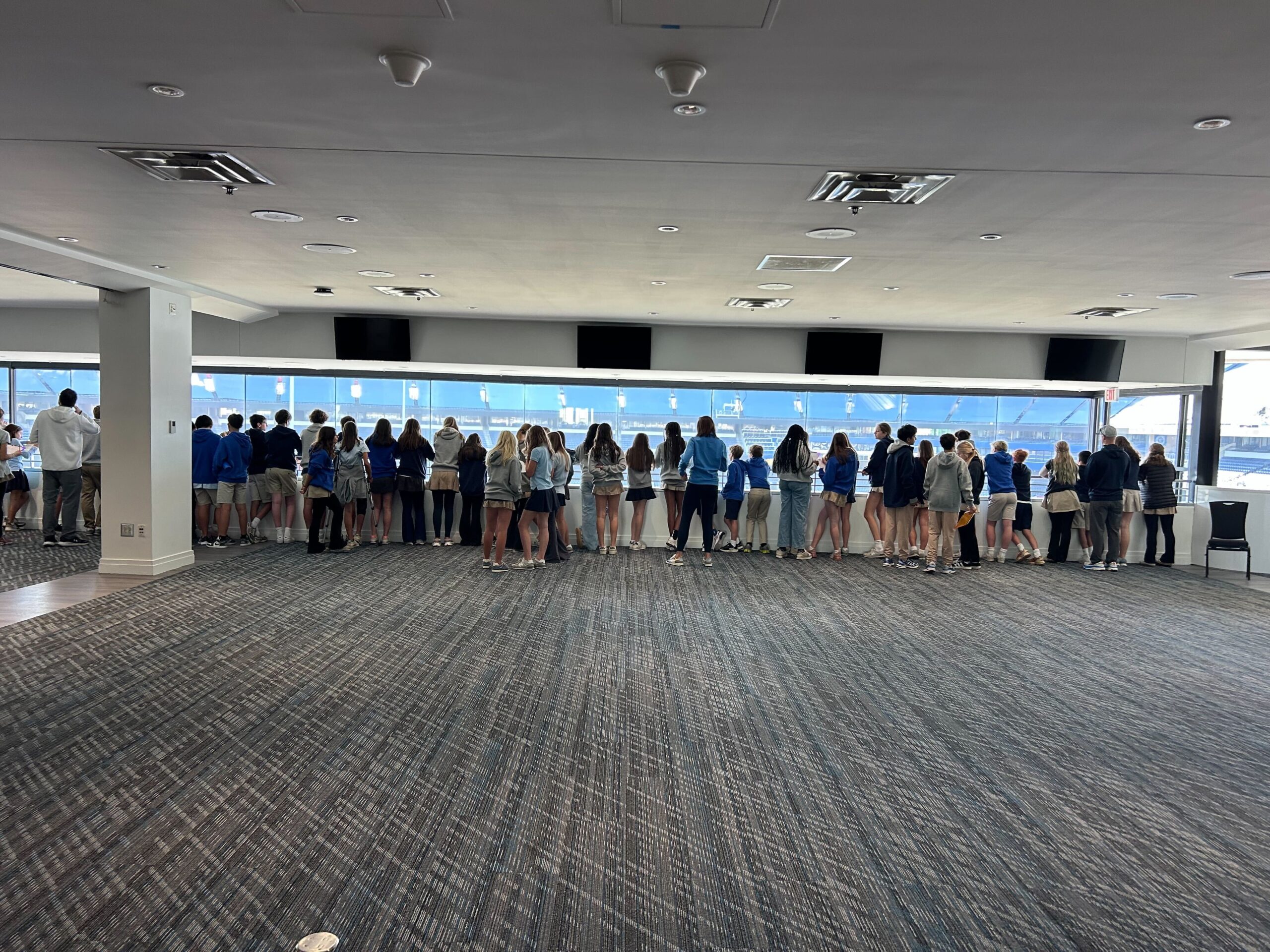
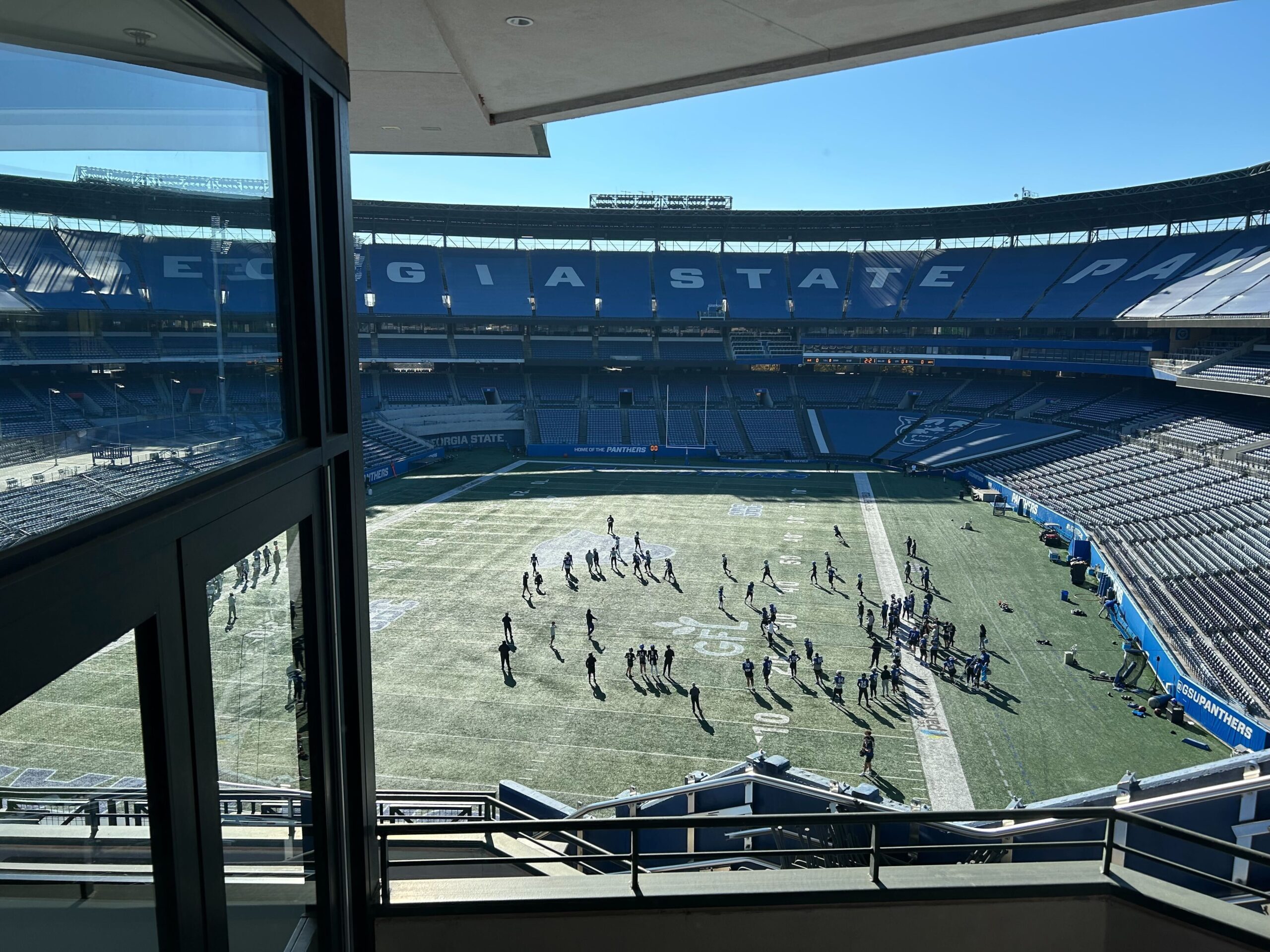
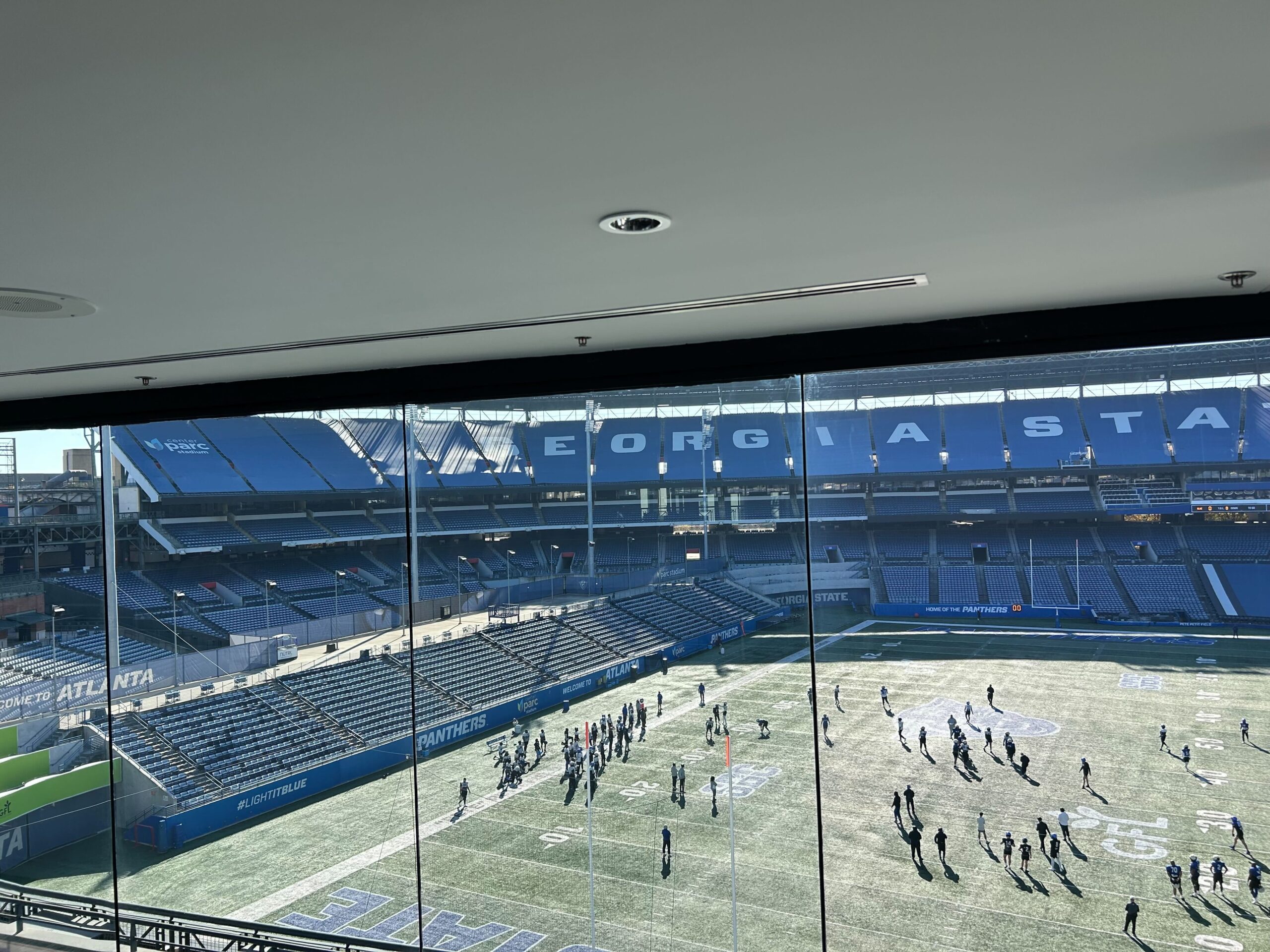
Learning expands possibility when students step beyond the familiar and into environments that challenge them to think differently, ask bold questions, and apply knowledge in new ways. Recently, Grade 8 Algebra 1 students experienced that transformative shift during an immersive expedition to Georgia State’s Center Parc Stadium and Georgia Tech’s Bobby Dodd Stadium. What began as a unit on algebra quickly grew into an exploration of architecture, engineering, sustainability, and innovation, revealing the powerful connections between classroom learning and the world students are preparing to shape.
Grade 8 student Ramine N. reflected, “Going to Georgia Tech and Georgia State helped us learn a lot of interesting facts, like the seating capacity, how the stadiums are built, and what they’re renovating.”
The expedition encouraged students to analyze seating systems, understand structural constraints, explore renovation plans, and think like the innovators who design spaces for thousands of people. Students traded traditional note-taking for deep observation, walking concourses, climbing stands, and visiting behind-the-scenes areas typically closed to fans.
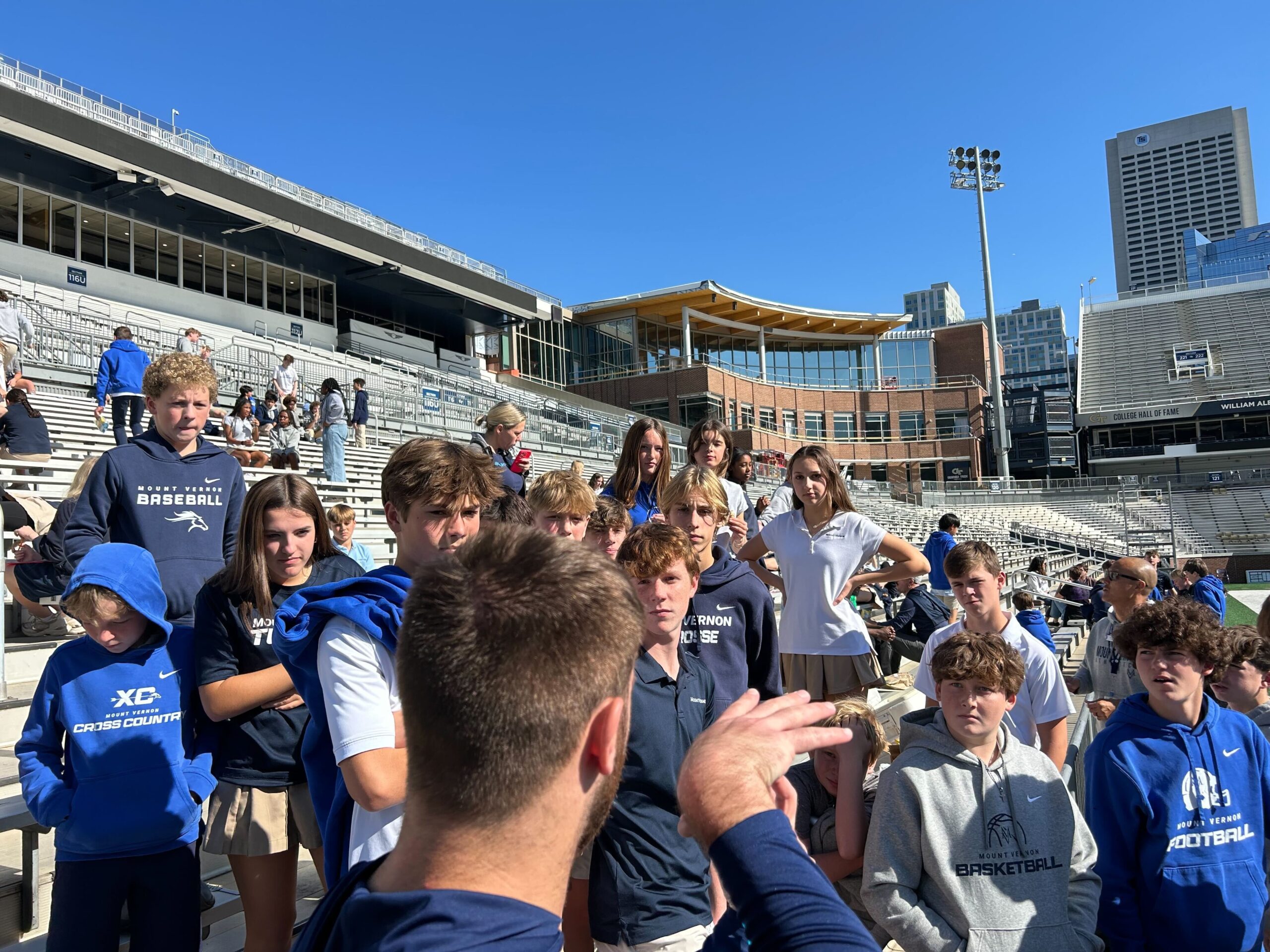
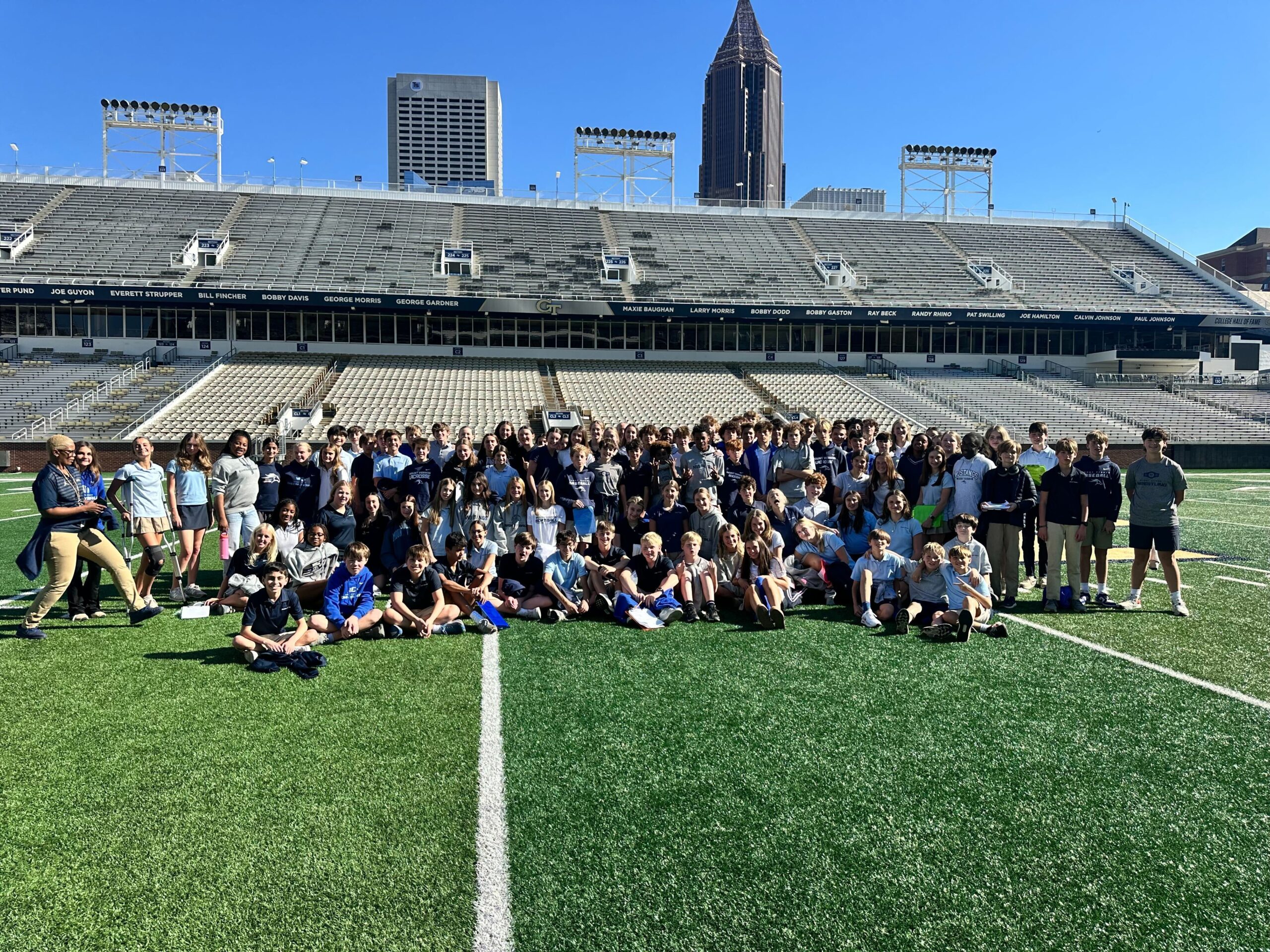
“When I go to a stadium, I’m just thinking about the game,” shared Kathryn H. “I’m not worried about if the hallways are wide enough or if the elevator can hold this many people. On this expedition, we were able to learn about the people who do focus on these aspects and the various things that they are working on to address them.”
From structural limitations caused by surrounding highways to the architectural choices behind renovating an Olympic-era venue, students discovered that stadiums are living systems, designed, reimagined, and engineered through a mathematical lens.
Algebra as a Design Tool
Grade 8 Math Teacher David Song designed this experience to demonstrate to students that numbers, equations, and geometric reasoning are not isolated tasks, but powerful design tools.
“To step out physically and hear from experts really expands perspective,” explained Mr. Song. “We want students to see how the shapes and math they learn in class connect to real-world projects, whether architecture, blueprinting, or stadium design.”
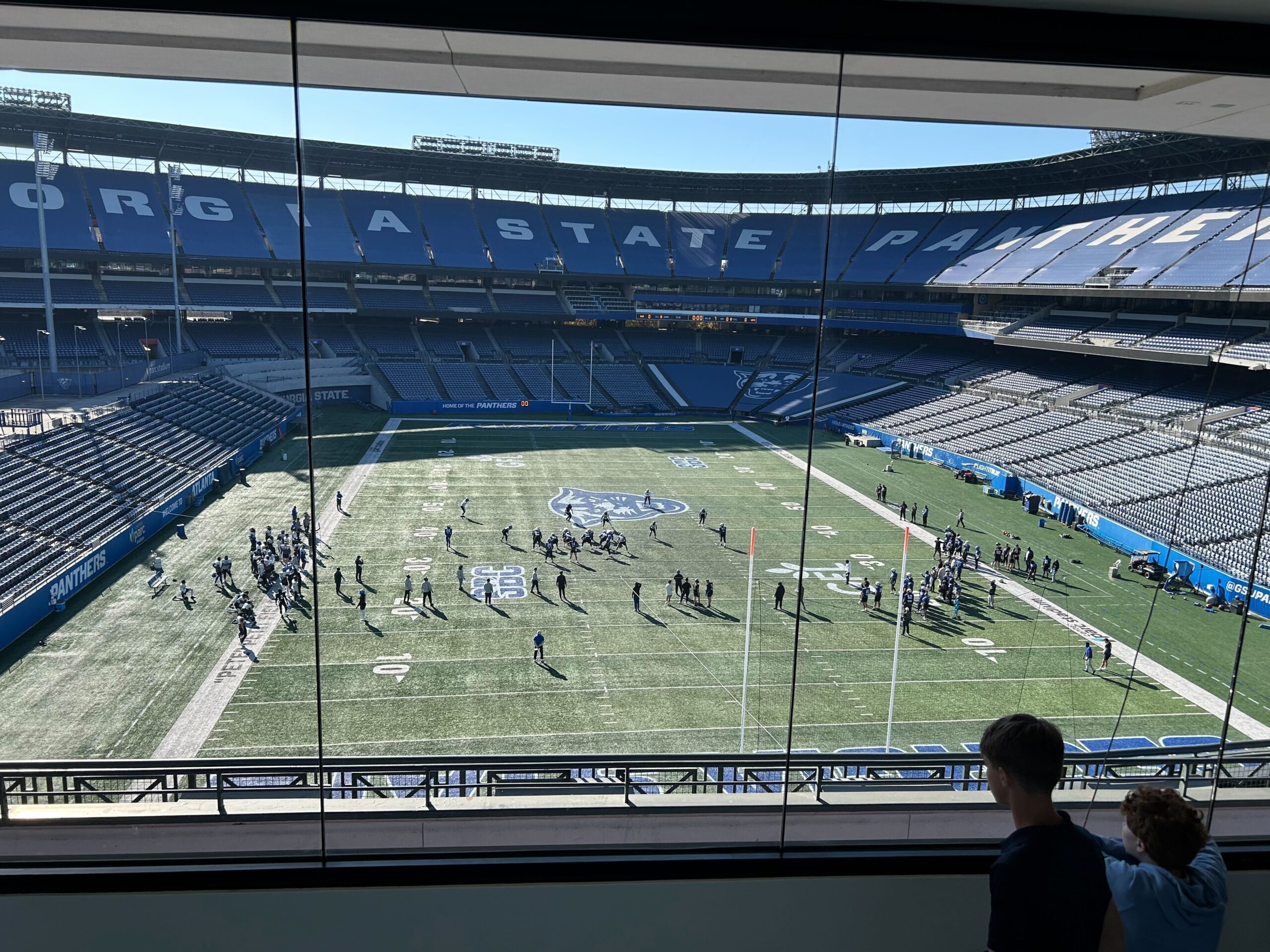
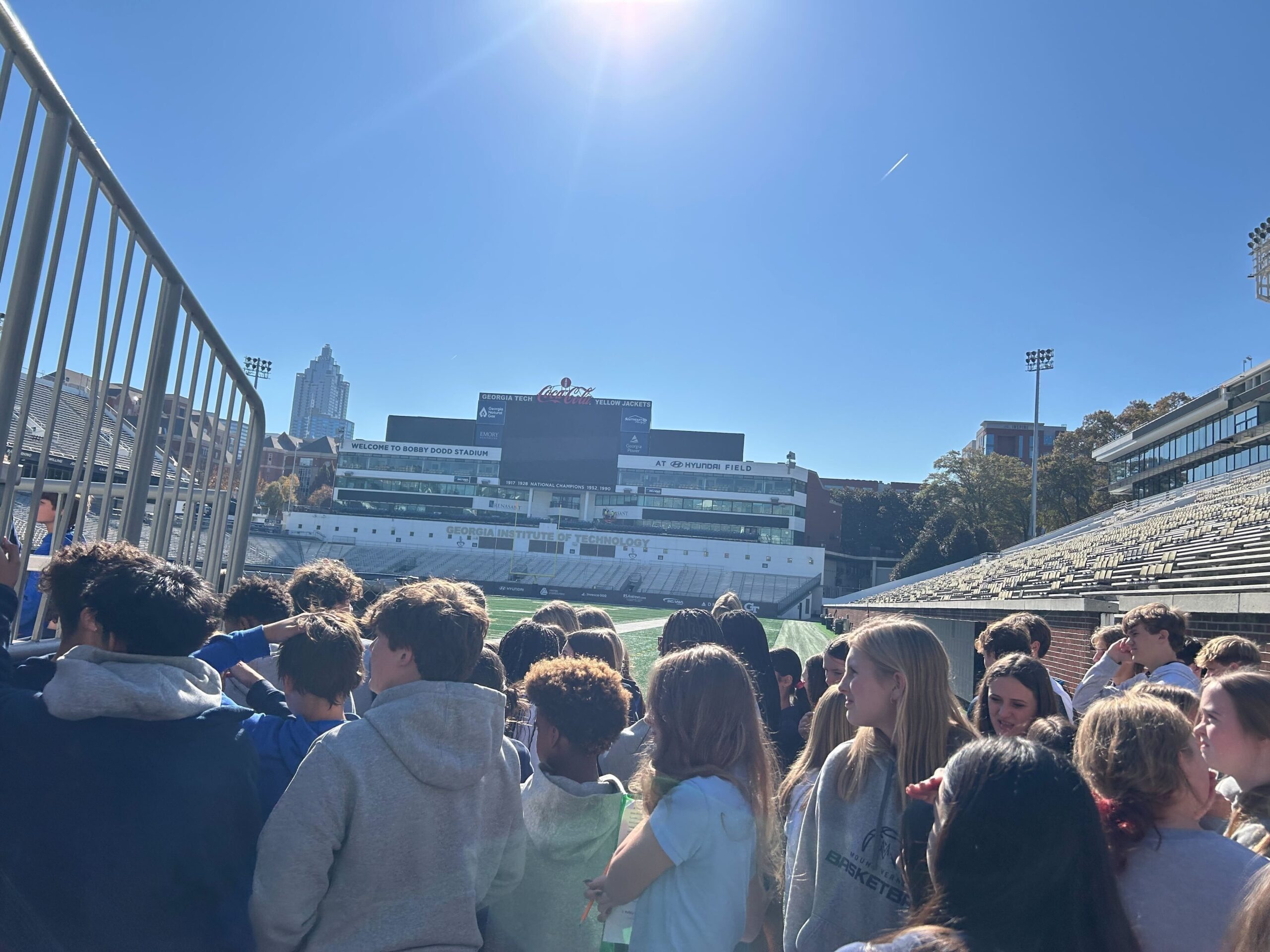
Through an MV family connection, students observed the authentic challenges professionals face, such as increasing seating without expanding a footprint, retrofitting older stadiums for modern needs, and planning fan experiences with mathematical precision.
Kathryn noted, “We learned about how to fit more in a confined space, how they had to make it kind of like a circle so everything would fit.”
Ramine added, “We’re going to use what we learned, like how many seats you need for how many people or how many VIP areas, to build algebra equations that help us plan.”
Suddenly, algebra wasn’t just something to solve; it became something to apply.
Sustainability, History, and the Innovation Mindset
Learning extended beyond mathematics. Students explored how stadiums reflect a city’s evolution, including Georgia Tech’s Olympic legacy and Georgia State’s adaptive reuse of the former Braves stadium, which saved hundreds of millions of dollars.
Mr. Song highlighted the sustainability lesson. “Georgia State’s stadium only cost $30 million to purchase and another $30 million to transform. To build it from scratch would have cost nearly $500 million. Students saw how reuse can be a powerful design choice.”
The experience sparked curiosity about future possibilities, from engineering to architecture to urban planning.
“It definitely fascinated me,” Ramine shared. “The dimensions and shapes, how everything had to fit, interested me a lot,” added Kathryn.
Reflecting on the experience, students encouraged future Mustangs to savor opportunities like this one.
“Appreciate the moment that you’re there,” said Ramine. “You’ll probably never have a moment like that again, an empty stadium, a tour guide showing you everything.”
“It was really cool to take math and apply it to something new like a stadium, which normally you wouldn’t think of as math, but it really is,” added Kathryn.
For Mr. Song, the most meaningful outcome was witnessing curiosity in real time. “Hearing them ask questions in the moment was powerful,” he reflected. “That curiosity is what we want, to help students see beyond short-term learning and imagine what they could do next.”
This is Mount Vernon: learning that expands beyond the classroom, reveals new passions, and helps students imagine themselves as innovators in a world waiting for their ideas. Learning that expands possibility.

- Alumni
- Athletics
- Global Impact Diploma
- IDEA, Inclusion, Diversity, Equity
- Innovation Diploma
- Inquiry Path
- Interim
- Learn, Serve, Give
- Lower School News
- Maker, Art, and Design
- Middle School News
- MV Online
- MV Ventures
- MVXperts
- Prefects
- Preschool News
- Upper School News
Looking for more stories?
Happy Hanukkah to our Mount Vernon community. The Festival of Lights invites reflection on resilience, tradition, and the ways light brings people together. May this season be filled with warmth, connection, and moments of joy with family and friends.