For the fifth consecutive year, the Mount Vernon Innovation Diploma (iD) is launching its signature “Future of …” design series, and in 2025, students are exploring one of the most complex challenges of our time: the Future of Cities. The “Future of …” is a design unit that spans the nine weeks of Mod 2 and culminates in an elaborate, fabricated showcase in 3North of the Upper School Building. The entire MV community is invited to walk through the immersive experience during the Christmas Arts Showcase, which this year will be held on Wednesday, Dec. 17, from 5:30 to 9:00 pm.
Since its launch, the “Future of …” unit has become a hallmark of iD, a space where design thinking, creativity, and interdisciplinary learning come together to imagine what lies ahead. Previous years have taken students on journeys through the Future of Retail in 2021, the Future of Food in 2022, the Future of Air Transportation in 2023, and the Future of Entertainment in 2024. In each case, students worked in teams to research, prototype, and present innovative future-focused solutions, often transforming parts of campus into immersive and interactive experiences.
Cities sit at the intersection of some of today’s biggest challenges: population growth, mobility, housing, sustainability, equity, technology, and community. The 2025 unit offers students a vast canvas to explore urban design, smart infrastructure, ecological resilience, community spaces, and social equity.
“Part of the power of the ‘Future of …’ project is how it accelerates student growth,” said Krista Fancher, Pathway Lead for iD Culture and Partnerships. “Under tight constraints and high expectations, students build confidence in creative problem-solving and collaboration. iD is about ownership, support, and aligning group energy toward making something new — and that’s exactly what we want them to do with cities.”
Emily Wilcox, Pathway Lead for iD Learning and Innovation, added, “The compressed timeline emulates real-world design constraints. Students learn to work quickly, think boldly, and iterate constantly — skills that will serve them well far beyond the classroom.”
As in past years, students are partnering with Maker to design and construct the structures and displays that bring their city visions to life. Using multiple materials, including wood, PVC, and others, students are building interactive and functional prototypes to populate their immersive environments.
Like past iterations, the 2025 “Future of Cities” unit includes team-based design challenges, physical and virtual prototypes, and immersive experiences, culminating in a public showcase for the community. Students are exploring themes such as urban mobility, green energy, sustainability, housing equity, communal spaces, and new ways of living, working, and learning in densely populated environments.
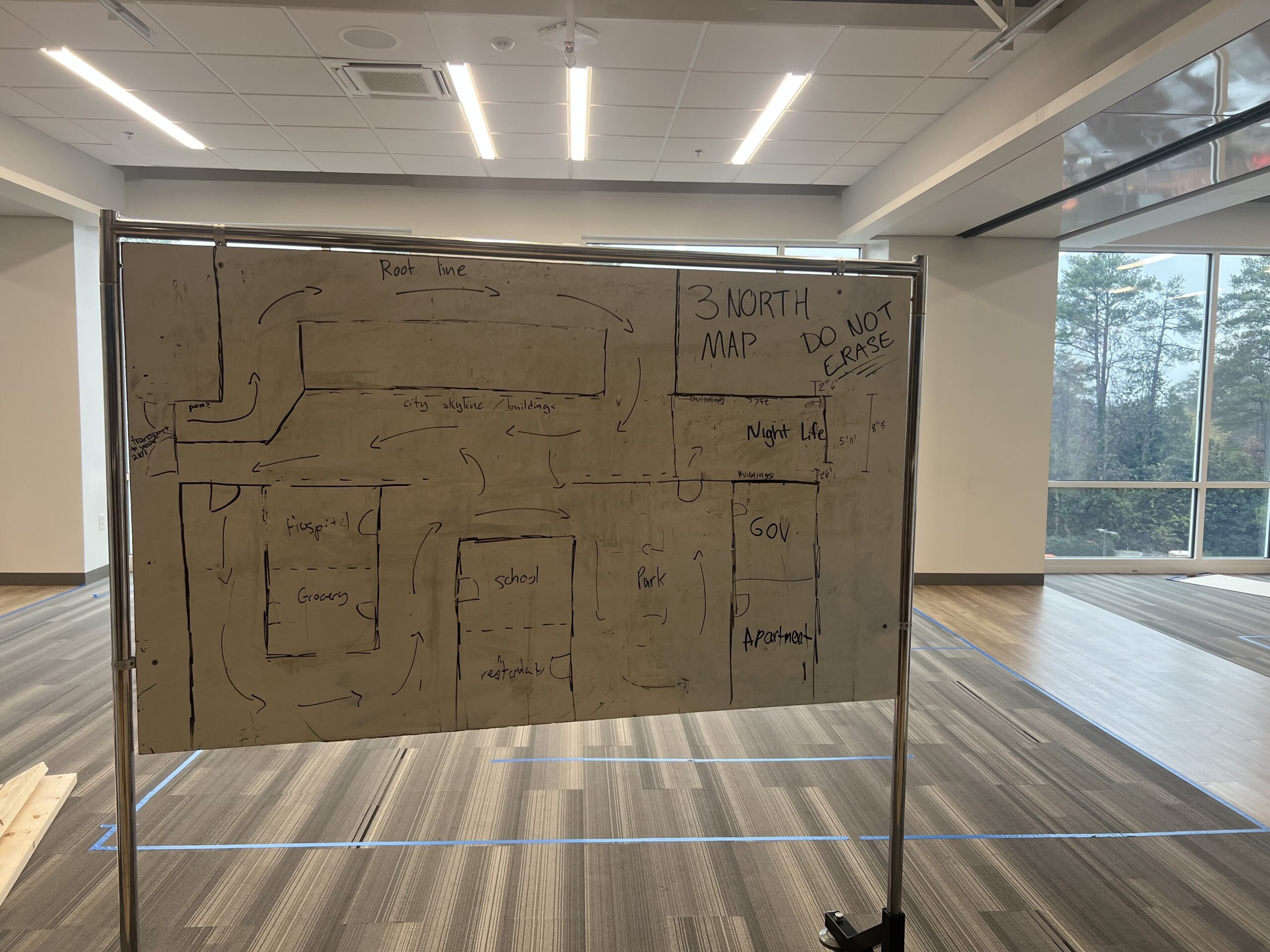
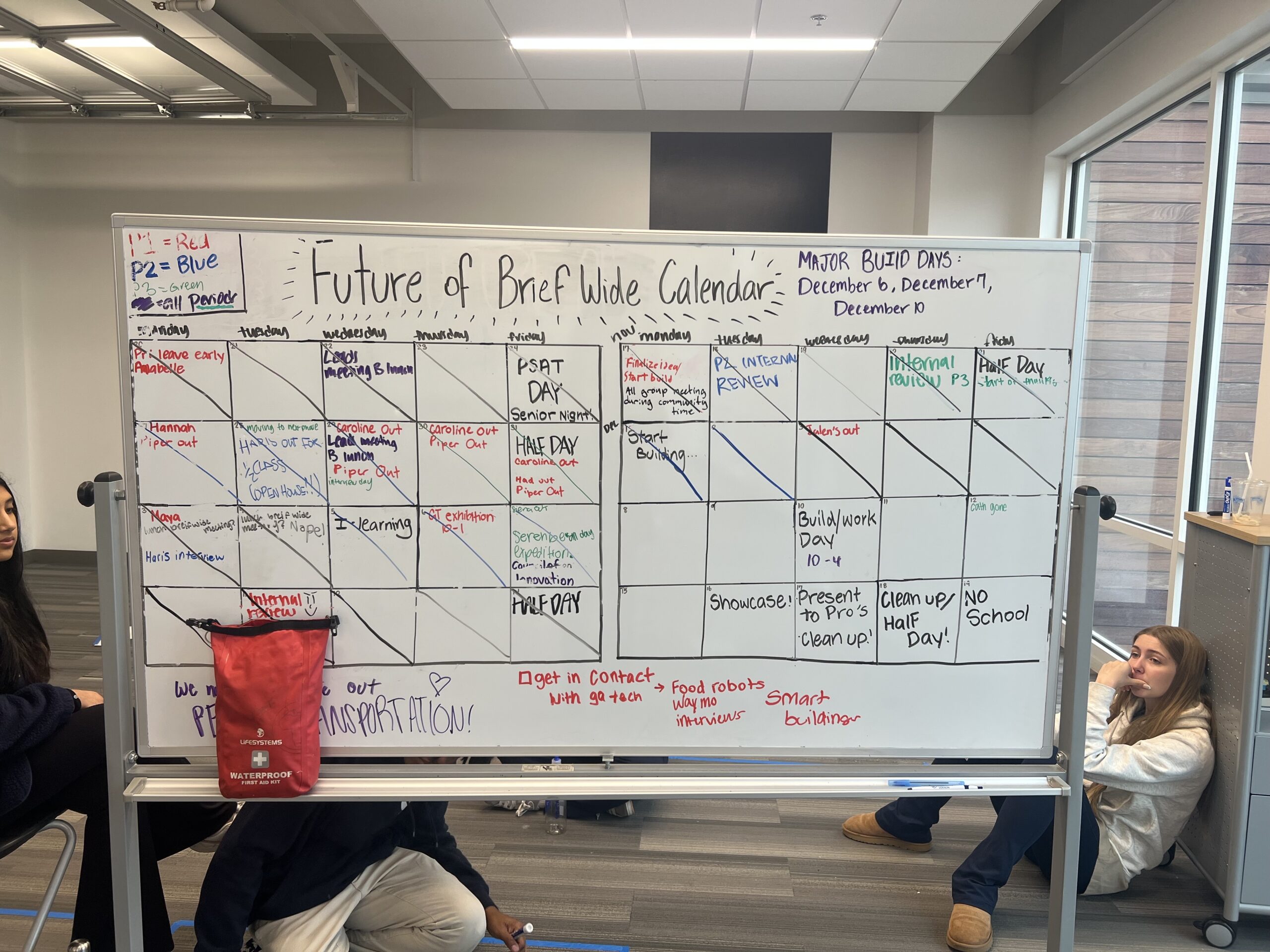
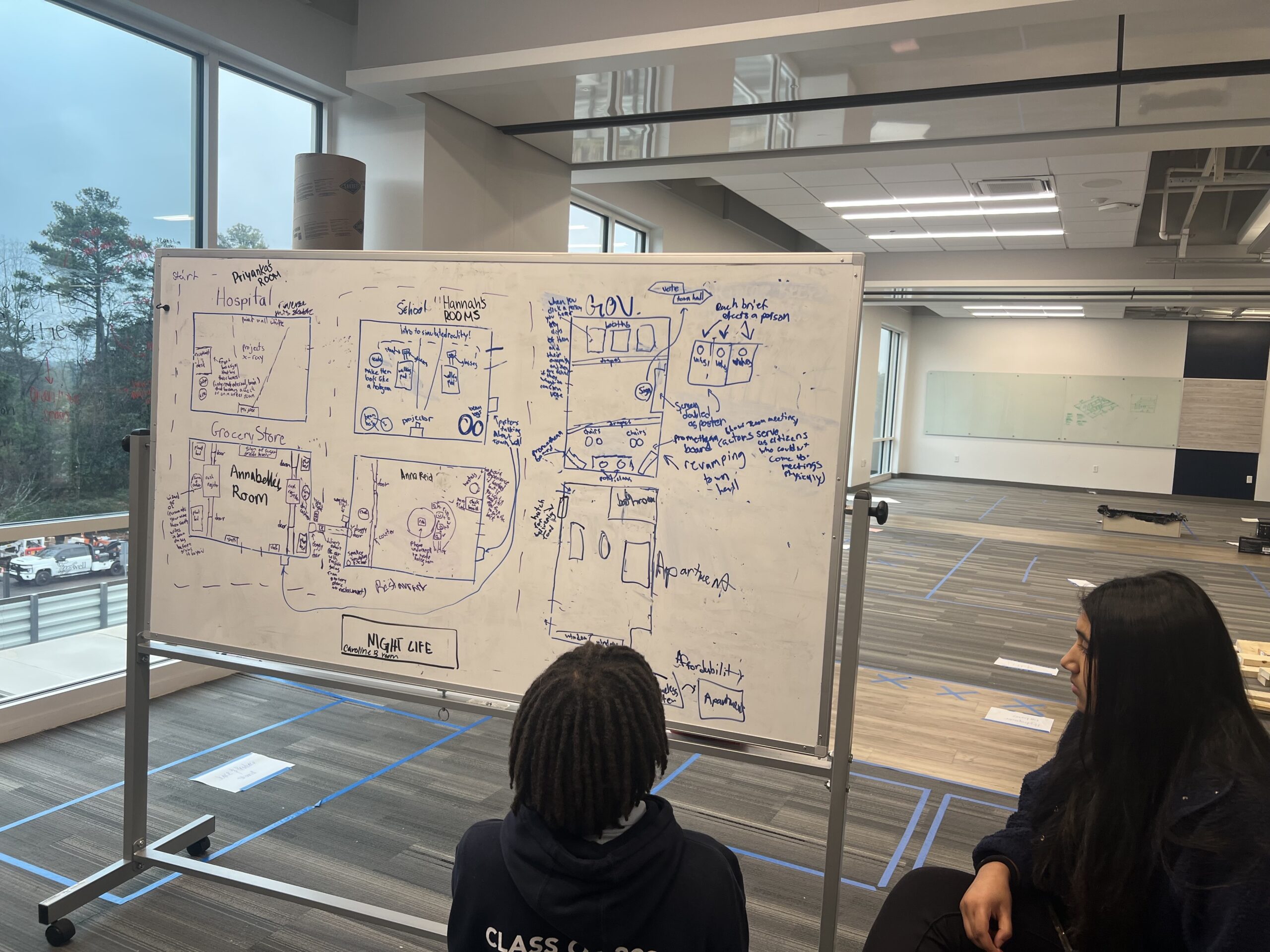
“We are mapping out what we want each room to look like and what is going to actually be usable and interactive in each building. It will be cohesive throughout this space and demonstrate how we’re addressing future problems. Currently, we’re working on the apartment building.” — Hannah Douglas, Class of 2027
“For the Night Club, we’ve been looking at life safety and features that could scan your drink to make sure no substances were added to it. Safety is a big focus, and we’re trying to imagine what would make people feel secure while still having fun.” — Caroline Birdsey, Class of 2027
The Future of… is an exercise in 21st-century skills: critical thinking, collaboration, empathy, and project management. By engaging with open-ended challenges without a predetermined answer, students learn to embrace uncertainty and see possibility.
With just a week left, students are working diligently to transform the third floor of the Upper School into a fully immersive experience that addresses both the challenges and opportunities the future will hold. By the time the Christmas Arts Showcase opens, families, peers, and the community will be able to explore and interact with a bold vision of the cities of tomorrow, all imagined and constructed by Mount Vernon iD students.
- Alumni
- Athletics
- Global Impact Diploma
- IDEA, Inclusion, Diversity, Equity
- Innovation Diploma
- Inquiry Path
- Interim
- Learn, Serve, Give
- Lower School News
- Maker, Art, and Design
- Middle School News
- MV Online
- MV Ventures
- MVXperts
- Prefects
- Preschool News
- Upper School News
Looking for more stories?
✨ Real-world learning right here in Atlanta.
Grade 7 students spent the day exploring the theme of mobility through two hands-on experiences across our local community. At the Atlanta water treatment facility, they followed the path of recycled water and discovered why conservation matters. Then, at Riverside Park in Sandy Springs, they investigated stories of forced migration through an interactive scavenger hunt.
These moments helped students connect systems thinking, geography, and human impact in meaningful ways. 🌎💡
#MountVernonSchool #AtlantaEducation #ExperientialLearning #InquiryBasedLearning #ProjectBasedLearning #WaterConservation #MiddleSchoolLearning #FutureReadyLearners