What happens when students are given not a prompt, but a problem?
In Mount Vernon’s Innovation Diploma (iD), that question is not theoretical. It’s the foundation of learning. And in Mod 3, through a first-of-its-kind partnership with Inspire Brands, students stepped into the role of brand strategists, navigating ambiguity, uncovering insights, and delivering solutions that resonated at the highest levels of a global organization.
For Krista Fancher, Innovation Pathway Co-Leader, the partnership was years in the making. “I had been trying to get in with Inspire Brands for at least three years,” she shared. “It was one of those situations where you’re always one connection away—but never quite there.”
That changed with a single introduction and a bold ask. Rather than waiting for a perfectly defined project, Krista flipped the script: Give us your time, your people, and your challenges, and our students will do the rest.
It worked.
Within weeks, ID students found themselves inside Inspire’s Innovation Center in Dunwoody, meeting with executives and listening, not for instructions, but for opportunity.


The Power of Not Knowing
Unlike traditional assignments, this was an “advanced design brief,” one where the path forward wasn’t clearly defined. “At the beginning, one of the students said, ‘We don’t even know what we’re supposed to do,’” Krista recalled. “And I said, ‘That’s exactly the point. You’re going to have to listen for it, find it, and build from there.’”
That ambiguity became the catalyst.
Students conducted interviews, observed customer experiences, and explored brand perception across Inspire’s portfolio, including Arby’s, Baskin-Robbins, and Buffalo Wild Wings. What they uncovered wasn’t just data. It was insight.
Rethinking Arby’s: A Generational Divide
One of the most compelling discoveries emerged around Arby’s. Students quickly identified a disconnect: while older generations maintained loyalty to the brand, younger consumers, especially those under 30, often viewed it through the lens of social media jokes and outdated perceptions.
So they tested it.
In a simple but powerful act of field research, students visited an Arby’s location together. What they experienced contradicted everything they expected: welcoming staff, a clean environment, and surprisingly strong menu offerings.
“That moment was everything,” Krista said. “They realized how narratives, especially online, can shape perception more than reality.”
From there, the team developed a refreshed positioning strategy, one that honored Arby’s iconic “We Have the Meats” campaign while expanding its relevance for a new generation. Their concept? Keep the core identity, but broaden the story: we have the meats, and more.
Designing for Experience
Across brands, students approached each challenge with the same rigor:
- For Baskin-Robbins, they explored new experiential offerings, including “After Dark” concepts aimed at older audiences.
- For Buffalo Wild Wings, they focused on the in-restaurant experience, prototyping table games and engagement strategies to enhance wait times and group interaction.
They weren’t just solving problems. They were designing ecosystems.
Phia Calvo, Class of 2027, said, “Exploring the brand identities of Baskin-Robbins, Buffalo Wild Wings, and Arby’s felt like assembling a complex puzzle, especially as we worked to deconstruct the negative perceptions Arby’s often holds among younger generations. Our firsthand experience at a local site shattered those stereotypes; despite our large group of 12, the service was impeccable, the environment was pristine, and unique touches like the “service bell” and secret menu left us genuinely impressed.”
Eight weeks after their first conversation, students walked into Inspire Brands’ headquarters to present their work. The setting: a 12th-floor boardroom. Long table. Executive audience. High stakes.
“The day before, rehearsal was rough,” Krista admitted. “But we knew they were ready.”
And they were.
Led by students including Phia Calvo, Brooke Nazarian, Madison Dunn, and McKinley Tann, the team delivered a presentation that was both polished and deeply informed. They fielded questions in real time, adapted on the fly, and spoke with the confidence of seasoned professionals.
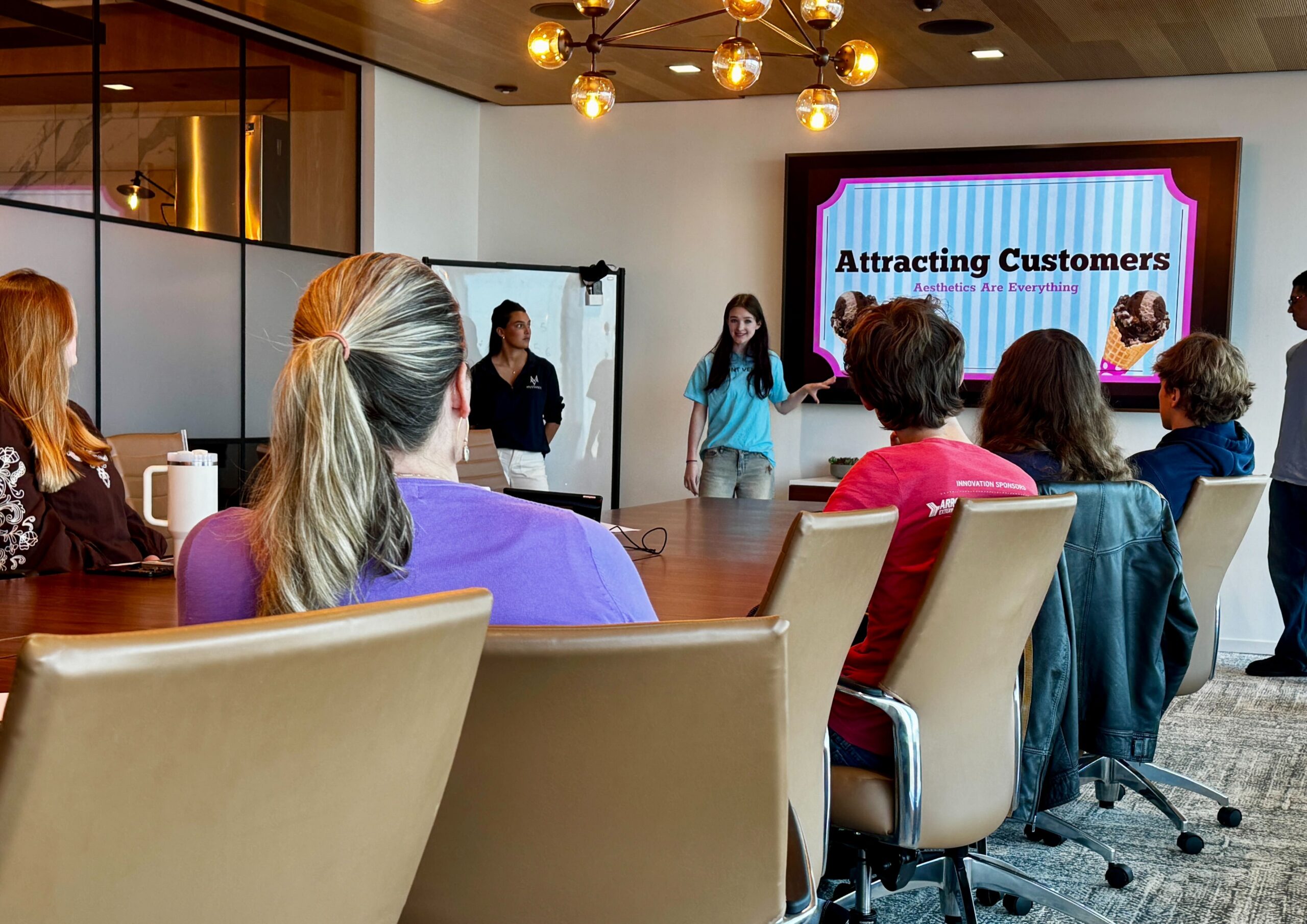

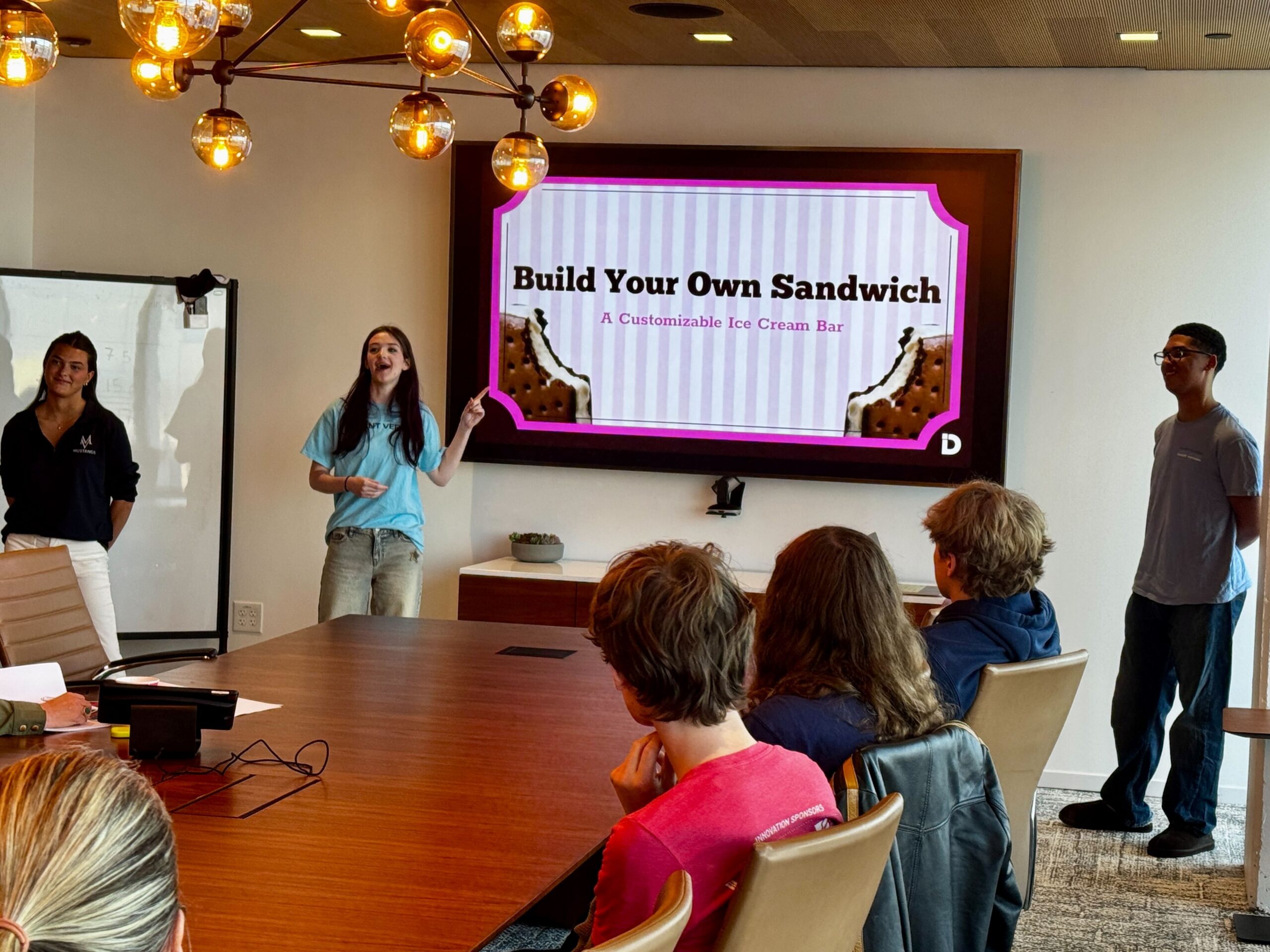
McKinley Trann, Class of 2026, shared, “The work we did felt different than ever before, spending time learning and researching Inspire from our point of view, and speaking to every person possible gave us a deeper understanding than if we were just given a goal.”
Just after the presentation, an executive, responsible for the Arby’s Foundation, paused the room.
“I have to tell you,” he said, “we sit through a lot of these. And this was one of the best we’ve seen.”
More Than a Project
For Krista, the success of the Inspire Brands brief wasn’t just about the final presentation. It was about transformation.
“These students take ownership in a different way,” she explained. “There’s no senioritis when you know you’re presenting to real executives. They care. They prepare. They rise to the moment.”
And something else happens, too: loyalty.
“When students work on a brand, it becomes their brand,” she said. “They advocate for it. They challenge perceptions. They tell a new story.”

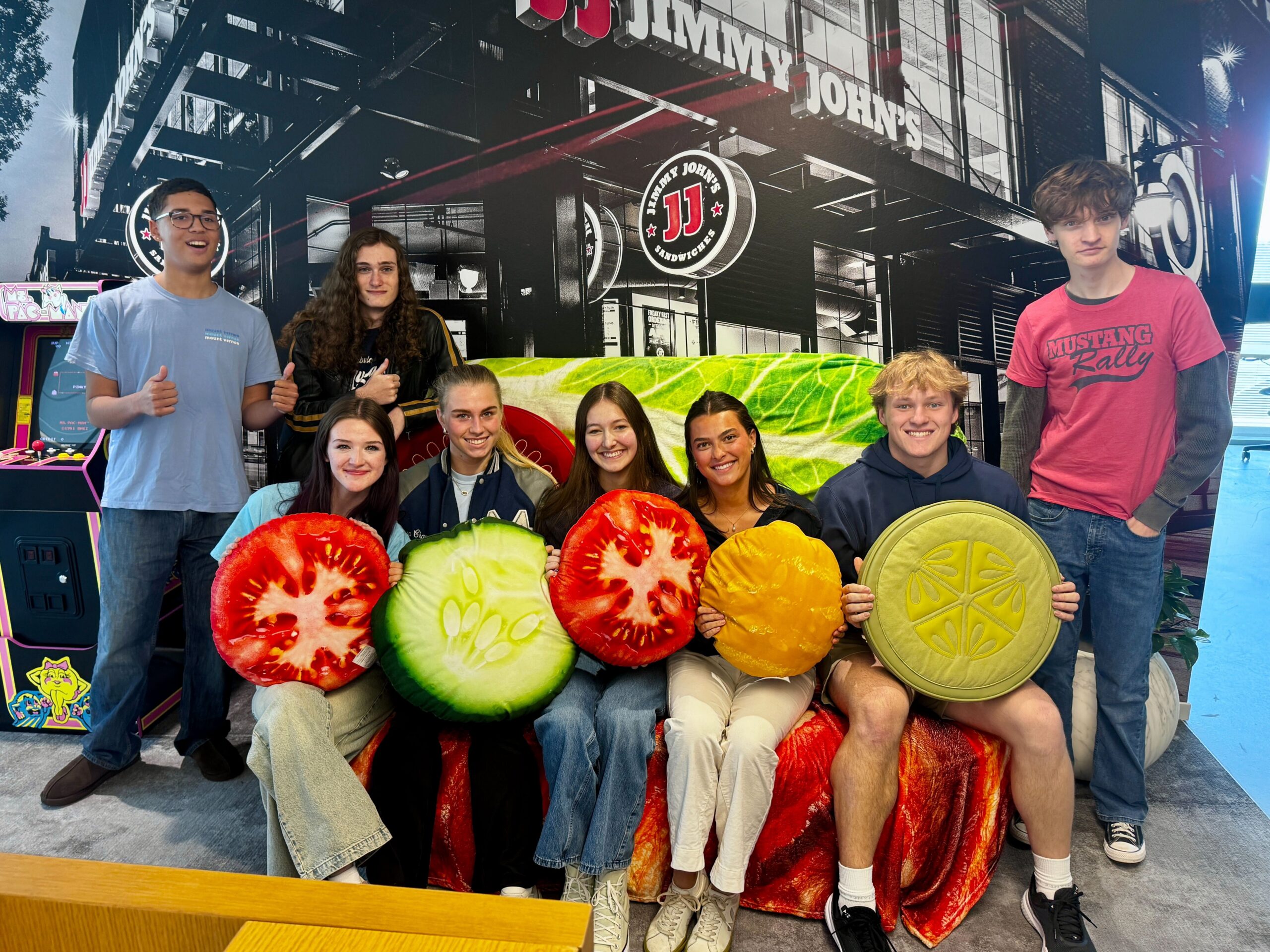
Perhaps most importantly, the experience reframed what it means to partner with students. There was no heavy lift for Inspire Brands. No need to craft the perfect brief. Just time, access, and openness.
“Our students don’t need everything defined,” Krista said. “They need a starting point, and the freedom to discover.”
It’s a model that not only benefits learners but delivers real value to organizations seeking a fresh perspective, especially when navigating generational shifts.
In a world where brands are constantly evolving, the ability to listen, interpret, and respond to changing audiences is critical. Mount Vernon students aren’t waiting to learn that skill someday. They’re practicing it now, inside boardrooms, alongside executives, and in partnership with brands shaping the future. And in the process, they’re proving something powerful: Given the opportunity, students don’t just rise to expectations. They redefine them.
- Alumni
- Athletics
- Global Impact Diploma
- IDEA, Inclusion, Diversity, Equity
- Innovation Diploma
- Inquiry Path
- Interim
- Learn, Serve, Give
- Lower School News
- Maker, Art, and Design
- Middle School News
- MV Online
- MV Ventures
- MVXperts
- Prefects
- Preschool News
- Upper School News
Looking for more stories?
🥖🇫🇷 + 🇻🇳 = 🌎
What do French baguettes, Vietnamese bánh mì, and a family’s journey across the world have in common?
Our Grade 7 French students took their learning beyond the classroom to @sate.grille, where they discovered how food, language, and history connect cultures.