Inside Innovation Diploma’s Fall 2026 Design Briefs
At the start of each school year, junior and senior Innovation Diploma students in the Upper School begin with a real design brief from a real organization. Something that they have been preparing for and building towards since their freshman year.
Design Briefs are not a simulation. Not a case study. They are real challenges, with real constraints, from organizations that are genuinely curious about what a group of high school students might create. This fall, those organizations are Verizon, Mercedes-Benz, Chick-fil-A, and Piedmont Pediatrics. But before we get into the briefs, it helps to understand where Innovation Diploma fits into the bigger picture of learning in the Upper School.
One Upper School. Three Pathways.
Mount Vernon’s Upper School offers three pathways designed to give students more ownership over how they learn and where they want to go: Inquiry, Innovation, and Impact.
The Inquiry Pathway gives students space to follow questions, develop areas of interest, and turn curiosity into deeper study and original work. The Impact Pathway centers on the Global Impact Diploma, connecting learning to global challenges, cross-cultural experiences, and purposeful action.
The Innovation Pathway is built around the Innovation Diploma, a four-year Upper School experience for students who want to learn by tackling complex problems, working collaboratively, and creating solutions for real people and organizations.
Innovation Diploma, or iD, has been part of Mount Vernon for more than a decade. It launched in 2014 after a design sprint brought students and innovators together around a simple question: How might we make school life more reflective of real life? The premise has remained remarkably consistent: give students meaningful problems, the tools to explore them, and the space to figure out what comes next.
A Brief is Not an Assignment
Before students sketch, prototype, or pitch, they have to figure out what problem they’re actually trying to solve. A design brief doesn’t come with a prescribed question or a single answer waiting at the end. It comes with a challenge, a context, and a set of constraints. Students have to determine what matters, who matters, and where they might be able to make an impact.
Innovation Diploma gives students the opportunity to practice what it means to think and work like a designer: understand a problem, get close to the people experiencing it, ask better questions, and build toward a solution.
“In iD, our motto is ‘age does not equal capability,’ and briefs are where we get to show people that we really practice what we preach. We have 16-18-year-old kids doing real, actual consulting work with companies. They’re not working on a typical school project with a clearly defined rubric, outcomes, and objectives; they’re using design thinking to create solutions for their clients. It’s a mutually beneficial relationship that we have with our partners.” — Emily Wilcox, Innovation Pathway Lead
It’s an approach iD has been refining for years. In Mod 2, iD students shift their focus from external clients to a more focused, futures-thinking design challenge in which they reimagine the future of different industries. This culminates in an immersive experience called “Future Of.” In fact, previous iD students have worked on everything from the future of retail and food to air transportation, entertainment, and cities. You can explore more Innovation Diploma stories from Mount Vernon, including iD’s 10-year milestone, students exploring the Future of Entertainment, and students stepping into the role of brand strategists with Inspire Brands.
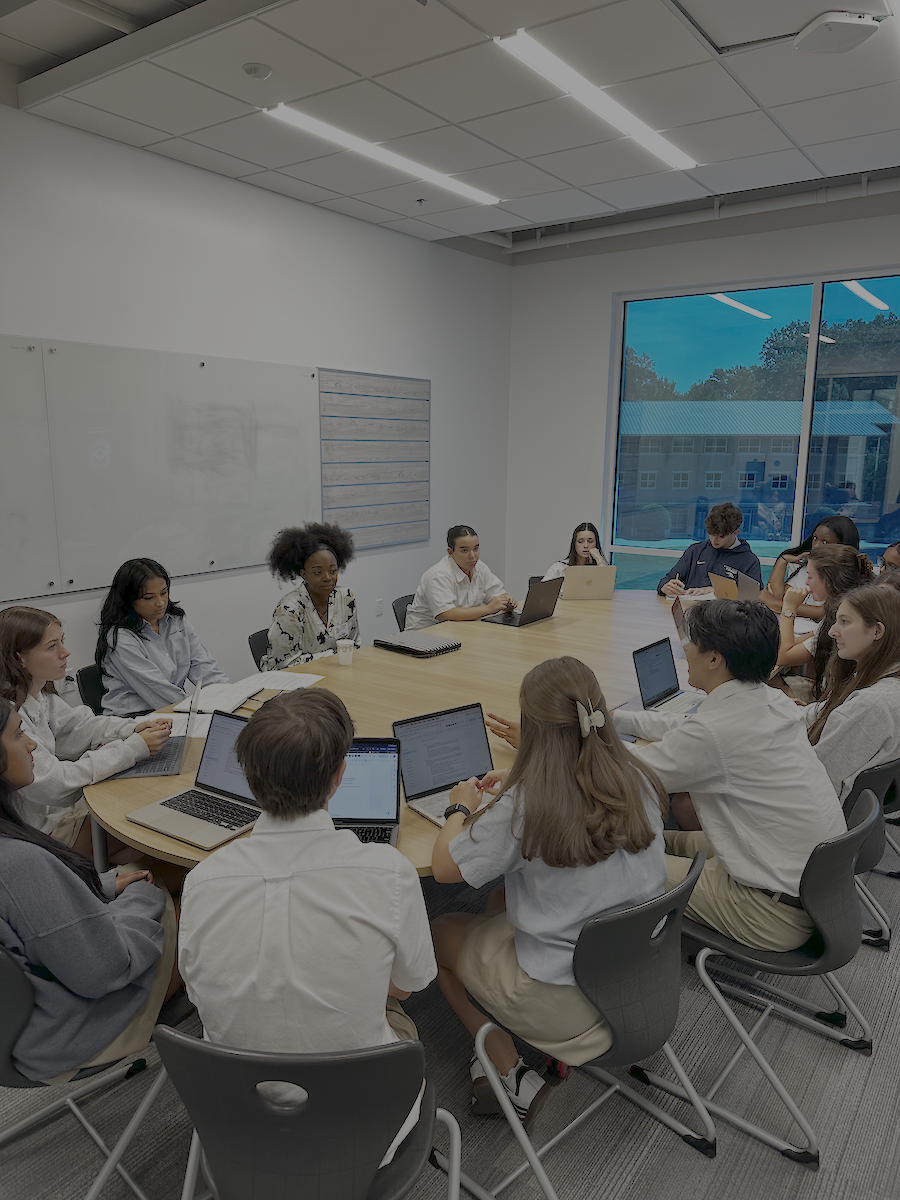
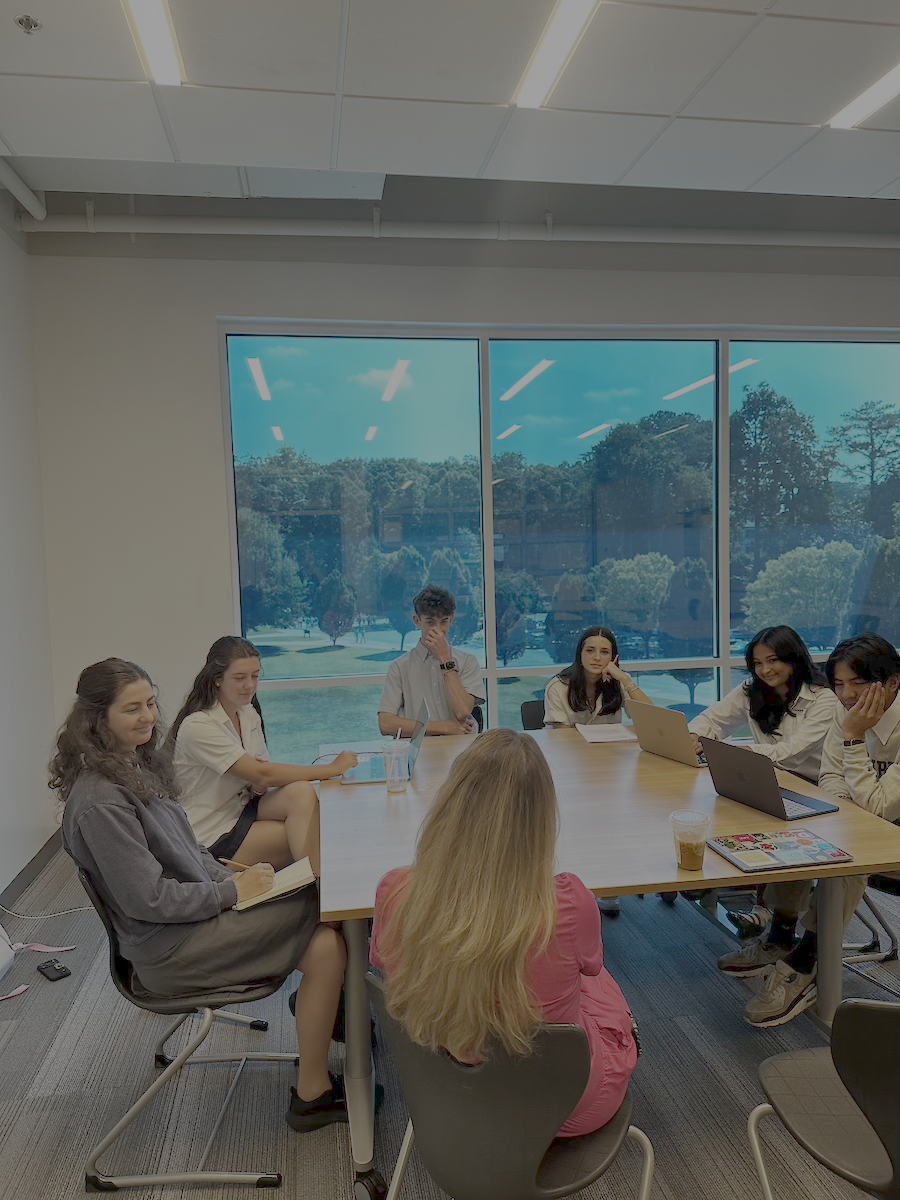
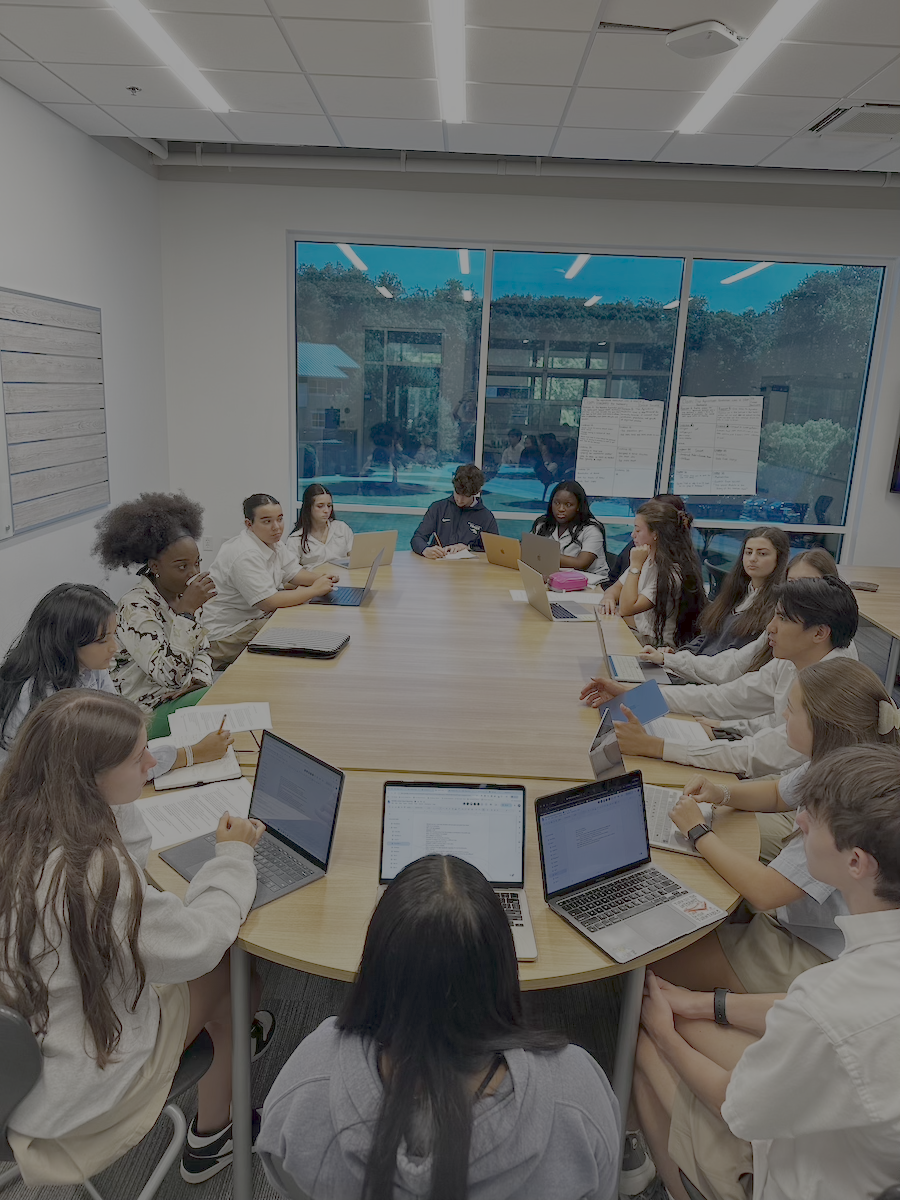
Four Industries, One Classroom
Look at the Mod 1 partner list and the range is immediately apparent: telecommunications, automotive, food service, and pediatric healthcare. The variety is intentional. Each brief asks students to step into a problem space they didn’t choose and likely haven’t encountered before. That means learning to ask different questions, listen to different people, and understand experiences that may be far from their own.
For the Piedmont Pediatrics brief, Caroline Birdsey, Class of 2027, shared where they are in the process. “Right now, we’re working to understand Piedmont Pediatrics as a whole, especially since they recently moved into a new building and are expanding the services they offer. We’ve been researching, interviewing people, and looking at the experience from both the patient and the staff side. Eventually, we want to help make that growth easier for families to navigate and make sure they can clearly understand everything Piedmont Pediatrics has to offer.”
The questions change. The users change. The context changes.
The process stays the same: start by understanding.
“We’re pretty passionate about giving our students experience with as many different industries, sectors, and businesses as possible. The reason is twofold: we’ve found that it helps students get closer to finding what they want to do in the future (or sometimes what they don’t want to do), and it also expands their worldview. When they design for different people, they develop a broader, more complete perspective. We can’t “design a better world” if we’re limiting who and what we interact with.” — Emily Wilcox
Before Anything Gets Designed
In Innovation Diploma, some of the most important work happens before anything gets designed.
Students start with questions.
- Who are we designing for?
- What do we actually know?
- What are we assuming?
- What might we be missing?
They observe.
They interview.
They research.
They test assumptions.
They sit with what they don’t yet understand.
It’s not always comfortable. And that’s part of the learning.
The goal isn’t to move quickly from a brief to a solution. It’s to stay curious long enough to discover a problem worth solving.
“We’re really excited to be working with Piedmont Pediatrics as they enter a period of growth. After moving into a new building and expanding the services they offer, the practice is looking for ways to make its online presence and physical space clearer, more welcoming, and easier to navigate for patients and their families. Our team is exploring opportunities in website design, marketing, branding, and wayfinding, with the goal of helping parents feel confident and supported throughout their experience. During our internal review on September 10, we shared the discovery work we’ve conducted through interviews and focus groups and received pivotal feedback that will help us refine our understanding of the problem and guide our next steps. We’re looking forward to our site visit, where we’ll listen to additional stakeholders and learn more about the needs of doctors, nurses, office staff, patients, and parents so we can create solutions that make a meaningful impact.” — Caroline Kincaid
When the Work Becomes Real
A real partner changes the nature of the work.
Students aren’t designing for a hypothetical customer or an imaginary organization. Someone is actually going to look at what they make. The questions become more specific. The research matters more. And when an idea doesn’t work, there’s a reason to keep going.
A Shared Way of Thinking
Innovation Diploma may begin with a different question than the Inquiry Pathway, but the two share something important: neither asks students to move quickly toward an answer.
Both give students space to follow questions, develop expertise, and make meaning from what they discover.
And while the Innovation Pathway looks different from Inquiry and Impact, all three reflect a larger belief at Mount Vernon: students should have meaningful opportunities to guide their learning and connect it to the world around them. The goal isn’t simply what students produce. It’s what they become capable of doing when the answer isn’t obvious.
By the end of Mod 1, students will have designed something a real organization can respond to: a concept, a prototype, a pitch, or perhaps a solution that continues beyond the classroom.
But the most important thing they build may be less visible. They learn that they can enter an unfamiliar problem, ask better questions, listen closely, make something, learn from what doesn’t work, and figure out what comes next.
They weren’t given an answer to find.
They were trusted with a problem worth solving.